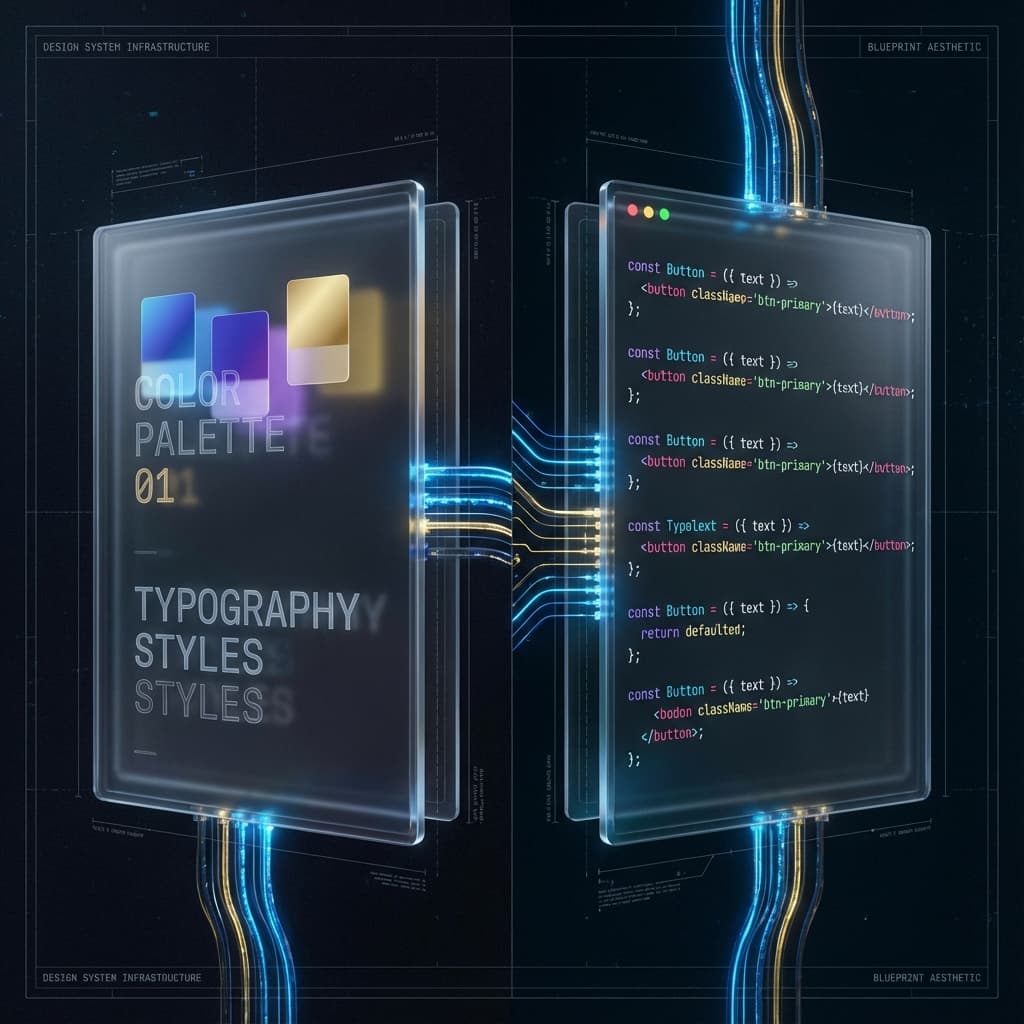
Bridging Design & Engineering with Systems
A Design System is more than a UI kit or a collection of components. It’s the infrastructure of your product—the shared language that aligns design (Figma) and engineering (code). When both teams speak different languages, velocity drops, inconsistencies grow, and scaling becomes painful.
In this log, we explore:
- Design Tokens Strategy
- Shadcn UI as Infrastructure
- Workflow Alignment
01. Why Design Systems Matter
A strong design system improves collaboration, ensures consistency, and accelerates product development.
Consistent UI/UX improves usability, accessibility, and engagement—signals search engines value.
02. Design Tokens
Design tokens are the atomic values of your design system. Instead of duplicating values, we define them once and share them everywhere.
Figma → Code → Browser
By mapping Figma variables directly to CSS variables, detailed design decisions become instantly consumable by the frontend.
theme: {
  colors: {
    primary: "var(--primary)",
    background: "var(--background)",
  }
}Treat tokens as product infrastructure, not styling shortcuts. One source of truth, zero drift.
03. Shadcn UI Strategy
Shadcn UI is not a traditional component library—it’s a strategy.
- Built on Radix UI primitives
- Fully accessible by default
- No black-box abstraction: You own the code
04. Final Thoughts
Great products aren’t built by design or engineering alone—they’re built by systems that unify both.
When design tokens, Shadcn UI, and workflow alignment come together, design and engineering finally move at the same speed.
That’s not just good UI—it’s great product infrastructure.
Log Status
Reading Complete