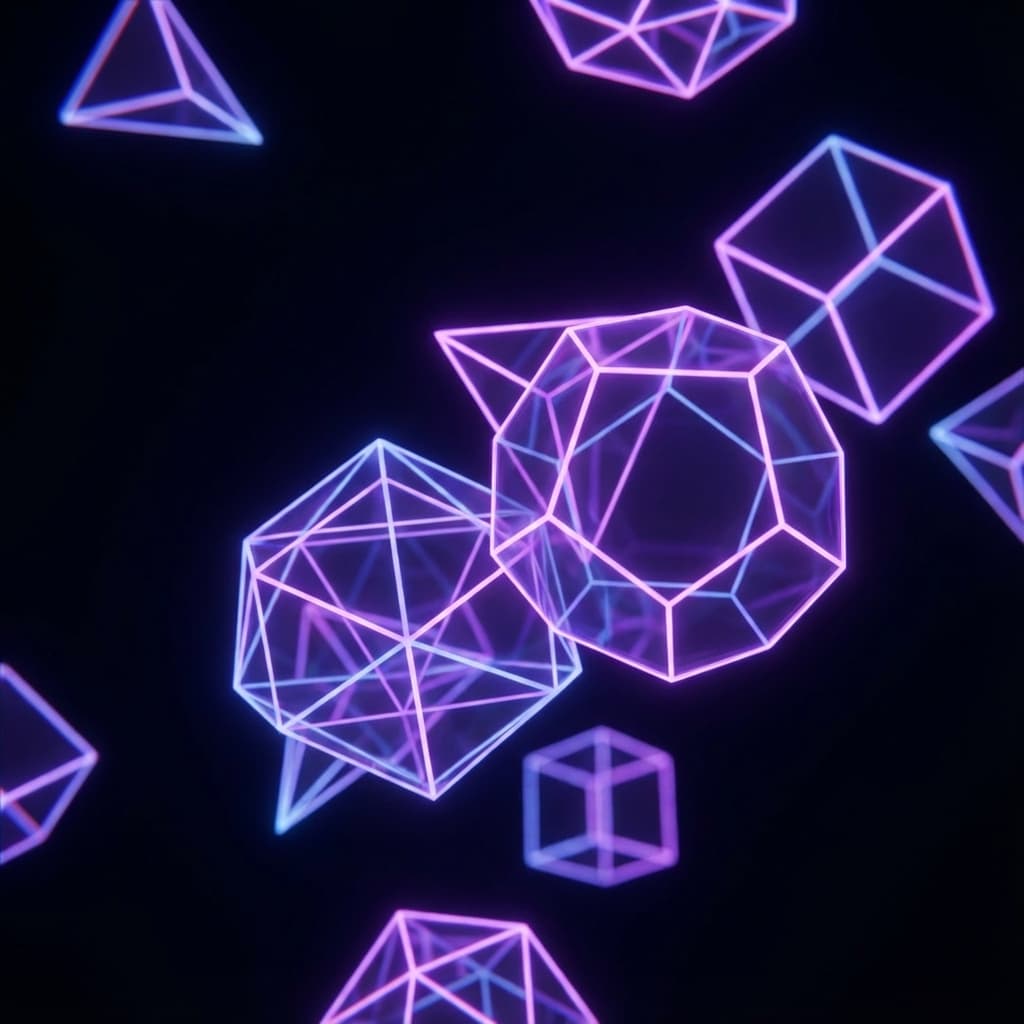
Building Immersive 3D Web Experiences
The web is traditionally flat—but it doesn’t have to be. With React Three Fiber (R3F), developers can bring rich, immersive 3D web experiences to life while staying inside the familiar React ecosystem. Built on top of Three.js, R3F makes 3D declarative, composable, and easier to manage at scale.
In this article, we explore:
- High-performance 3D websites
- Accessibility in WebGL
- Optimization techniques (Draco, Instancing)
01. Why React Three Fiber?
React Three Fiber is a React renderer for Three.js. Instead of imperatively controlling a 3D scene, you describe it using JSX.
Declarative
Managed via standard React state & hooks.
Ecosystem
Access to powerful libraries like drei and physics.
Lightweight, well-optimized 3D experiences improve engagement metrics like time-on-site, indirectly boosting SEO.
02. The Performance Cost
Let’s be honest: 3D is heavy. High-resolution textures, complex models, and lighting can drop FPS and overload the GPU.
Optimization is Mandatory
With the right techniques, 3D on the web can be smooth and scalable.
1. Draco Compression (Must-Have)
Always compress your GLTF / GLB models using Draco compression.
- Reduces model size by up to 90%
- Faster network loading & lower memory usage
2. Geometry Instancing
If the same object appears multiple times (trees, particles), do not duplicate geometry. Use instancing to drastically lower draw calls.
3. Disable Anti-Aliasing on High-DPI
On high pixel density screens (Retina), anti-aliasing is expensive and often unnecessary. Disabling it saves GPU power.
03. Accessibility (A11y)
Immersion should never come at the cost of accessibility.
04. Final Thoughts
The future of the web is interactive and immersive. With R3F, you can push beyond flat layouts without sacrificing performance.
When done right, 3D doesn’t just look cool—it tells a story.
Welcome to the next dimension of the web 🌌
Log Status
Reading Complete